It’s a curious phenomenon, isn’t it? You see a list of the top 10 hottest PC games, and nestled amongst the usual suspects—the sprawling RPGs, the competitive shooters, the intricate survival games—you might find something that gives you pause. Titles that promise not epic quests or fierce battles, but… space. Vast, often beautiful, and profoundly empty digital landscapes. These are the empty, floor-only virtual worlds, and their rising popularity is one of the most fascinating trends in modern gaming.
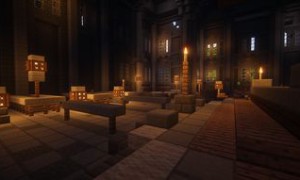
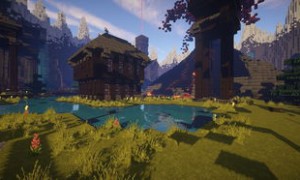
So, what exactly are they? Imagine stepping into a hyper-realistic environment—a misty forest at dawn, a serene Japanese garden, a minimalist geometric plane floating in a starry nebula. The visuals are stunning, the atmosphere is palpable, but there are no objectives, no enemies, no NPCs to interact with. Your only companion is the ambient soundscape and the freedom to move, or more often than not, to simply be. These are not games in the traditional sense; they are digital sanctuaries.
The appeal is a direct response to the sensory and cognitive overload of our daily lives, and even of mainstream gaming itself. Many popular games are a form of “productive leisure”—they demand strategy, quick reflexes, and constant engagement. They are, in their own way, another job. An empty virtual world offers the opposite: a job with no tasks. It’s a place to decompress, to let your mind wander without the pressure of performance. For students, remote workers, or anyone feeling the weight of digital connectedness, these spaces provide a rare pocket of pure, unadulterated calm. They are the video game equivalent of staring out a window or sitting quietly in a park.
Furthermore, these worlds have become the new digital public squares for a certain type of social interaction. Platforms like VRChat often utilize these simple, stable environments as “hubs” or “home worlds.” Without complex geometry or demanding gameplay mechanics to cause lag or glitches, they become ideal, stable stages for conversation. The “gameplay” shifts from looting and shooting to talking, gesturing, and simply sharing a space with friends or strangers from across the globe. The emptiness of the world serves to highlight the richness of the human interaction happening within it. It’s a blank canvas for social connection.
There’s also an undeniable artistic dimension. These environments are often created by digital artists and developers who want to evoke a specific mood or showcase a visual concept without the constraints of a game loop. Walking through one can feel like visiting a gallery exhibit or an architectural installation. You are an observer in a living painting, encouraged to appreciate the play of light, the texture of surfaces, and the careful composition of the scene. This transforms the user’s role from a “player” to a “visitor” or “experiencer,” which is a uniquely passive yet deeply engaging form of digital entertainment.
In essence, the inclusion of these empty, floor-only worlds on lists of the hottest PC games signals a maturing and diversifying of what we consider a “game” to be. They acknowledge that the value of a virtual experience isn’t solely tied to objectives and rewards. Sometimes, the hottest commodity a game can offer is a moment of peace, a stable place to connect with others, or a beautiful space to get lost in with your own thoughts. They prove that in an increasingly crowded and noisy digital universe, emptiness itself can be a profound and sought-after feature.